25 Brilliant Ways to Use Yoto Make Your Own Cards for Homeschooling
If you have a Yoto Player in your home, you might already know how wonderful it is for listening to audiobooks, music, and children’s podcasts. But one of the best features for homeschooling families is the ability to make your own audio cards!
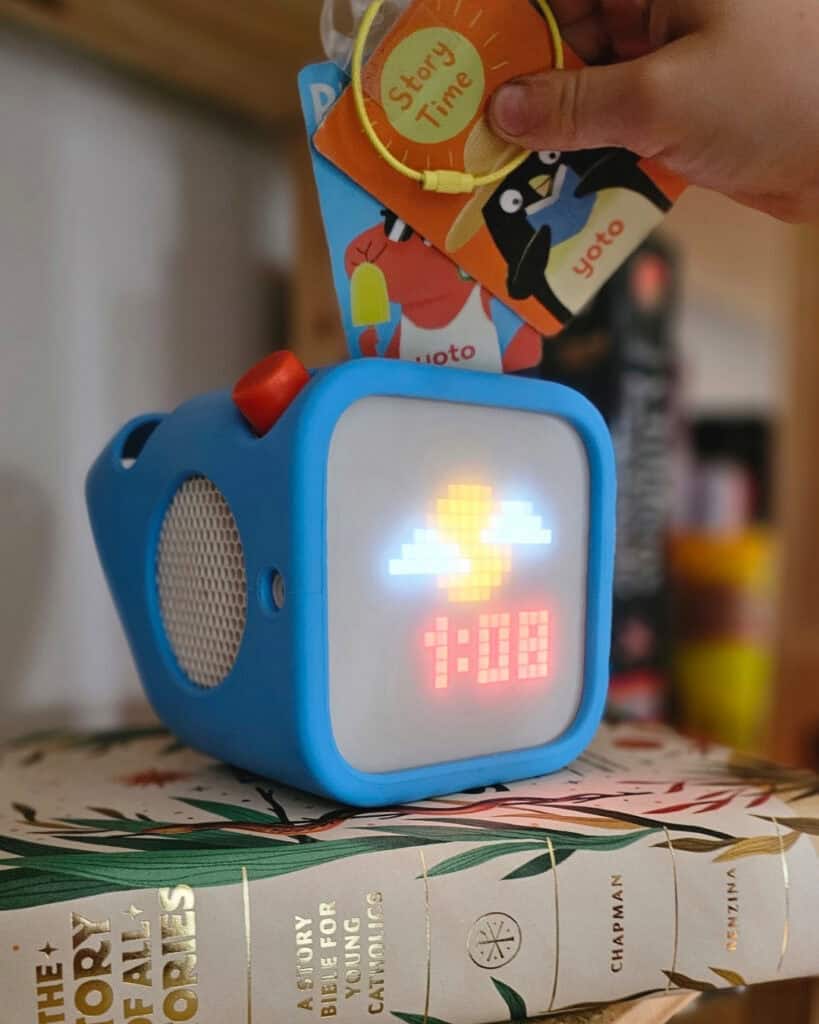
With Yoto Make Your Own cards, you can create personalised playlists using your own recordings and compatible audio files. This opens up so many possibilities for learning at home.
Some of the possibilities… multiplication tables, poetry, Scripture, history dates, foreign language vocabulary, catechism questions, and even recordings of Grandma dearest reading a favourite story.
One of the things I love about this idea is that children can revisit what they’re learning without needing to sit down with another worksheet or book. They can listen while drawing, building with blocks, resting, or enjoying some quiet time.
If you’re looking for creative ways to use your Yoto Player in your homeschool, here are 25 ideas to get you started!
Yoto Make Your Own Cards for Language Arts
Language arts is full of wonderful opportunities for audio learning. From poetry to spelling practice, these cards can become a lovely part of your morning basket.
1. Poetry Memorization
Record yourself reading a favourite poem, or find an audio recording you have permission to use. Include the whole poem, or divide longer poems into individual tracks.
Children can listen throughout the week and gradually become familiar with the words. This is especially lovely for Charlotte Mason-style poetry study!
2. Spelling Words
Create a spelling practice card with your spelling list for the entire year. Read each word clearly, leave a little pause, and then spell it aloud. Each chapter is a new week. You’re set!
For more advanced vocabulary, you could even record a sentence using each word so children hear it in context.
3. Grammar Songs and Rhymes
Record grammar rules, parts of speech, punctuation reminders, and other little rhymes that help children remember what they’ve learned.
A catchy recording can make those grammar facts much easier to remember!
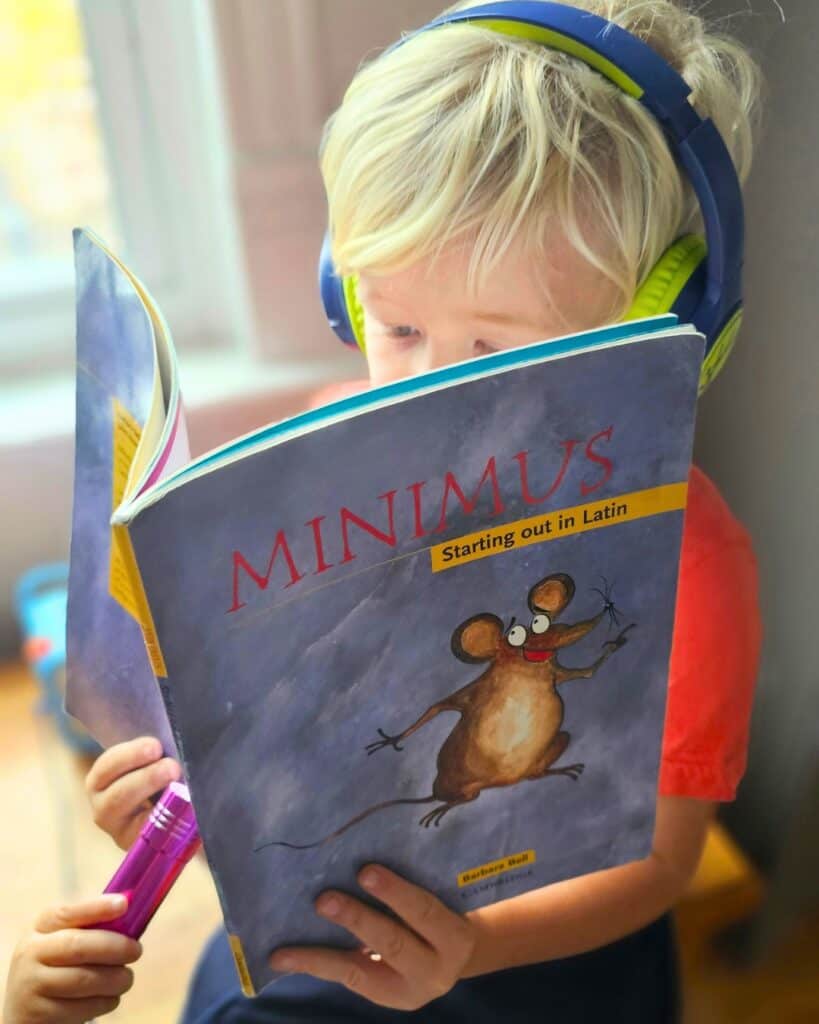
4. Latin Vocabulary
Create cards for Latin vocabulary, common prayers, declensions, and conjugations.
Record the Latin word followed by its English meaning, leaving a pause for children to repeat it.
You could make a separate chapter for each vocabulary unit.
5. Listening to Great Literature
Create your own collection of public-domain literature recordings or compatible audiobook files.
Children can listen to classic stories, fairy tales, fables, and poetry while following along in their books or enjoying some quiet time. There are many of these available on yoto space.
Yoto Make Your Own Cards for Mathematics
Why not turn your Yoto into a little mathematics tutor?
6. Multiplication Tables
This is one of the first cards I’d make! Not all math has to be in a workbook, in fact it is pretty handy to have it available for on-the-go and extra review.
Record your multiplication tables, giving children a chance to answer before you say the answer aloud.
For example: “Seven times eight… pause… fifty-six!”
Make a separate card for each times table or combine them into one collection. You can also take your multiplication memory songs and sing them!
7. Addition and Subtraction Facts
Create short recordings of basic addition and subtraction facts.
You can make the questions progressively more challenging as your children become confident.
8. Skip Counting
Record skip counting by twos, threes, fives, tens, and other numbers.
This is particularly helpful for younger children who are still developing number sense.
9. Mathematics Definitions
Make a little audio glossary of mathematical terms such as numerator, denominator, product, quotient, perimeter, and area.
A quick review while playing can help children become more familiar with mathematical vocabulary.
Yoto Make Your Own Cards for History and Geography
Audio cards are a wonderful way to reinforce history and geography lessons, especially when you’re studying a particular period or topic.
10. Historical Dates and Events
Record important historical dates and the events associated with them.
For example, you might create a card with the dates of major events in Canadian history, important battles, or the reigns of significant monarchs.
Keep the recordings short and easy to revisit.
11. History Timeline Review
Create a chronological audio timeline of the people and events you’ve been studying.
Children can listen to the events in order, helping them develop a sense of historical sequence.
12. Famous People and Biographies
Make short recordings about historical figures, explorers, inventors, artists, and saints.
You could include a few interesting facts about each person, along with the dates and events they’re remembered for.
13. Geography Facts
Create cards for countries, capitals, provinces, rivers, mountain ranges, and other geographical features.
For younger children, you could make a simple question-and-answer game. For older students, include more detailed geographical information.
14. Map Work and Place Names
Record the names of geographical locations your children are learning to identify on maps.
This could include Canadian provinces and territories, European countries, oceans, continents, or important biblical locations.
Catholic Homeschooling Yoto Cards
There are so many possibilities for Catholic homeschoolers! You can create a little collection of cards to support religious education, prayer, and liturgical living.
15. Catechism Questions and Answers
Record catechism questions followed by their answers.
You could make a card for each topic you’re studying, such as the Sacraments, the Ten Commandments, the Beatitudes, or the Creed.
This is a lovely way to revisit what children have learned in religion lessons.
16. Traditional Catholic Prayers
Create a collection of recordings of traditional Catholic prayers.
Include prayers such as the Our Father, Hail Mary, Glory Be, the Apostles’ Creed, the Angelus, and the Act of Contrition.
You could even make a special morning prayer card for your homeschool routine.
17. Scripture Memorisation
Record favourite Bible verses and passages for children to learn.
You might choose a different verse for each week or create a collection around a particular theme.
18. Saint Stories and Feast Days
Record short biographies of favourite saints, including their feast days, patronages, and memorable stories.
You could create a whole collection of saint cards to use throughout the liturgical year! You can also link your favourite saint podcasts like Saints Alive as an RSS feed! I have a step-by-step guide that shows you exactly how to link any podcast and have it automatically update itself with new episodes when connected to wifi.
19. Latin Prayers and Hymns
Make recordings of traditional Latin prayers and hymns, along with their English meanings.
Children can listen and become familiar with the words and pronunciation.
Yoto Cards for Foreign Languages and Independent Learning
Audio is particularly useful when children need to hear words and phrases spoken aloud.
20. Foreign Language Vocabulary
Record vocabulary in your chosen language, followed by the English translation.
Include everyday phrases, greetings, numbers, colours, food, and useful expressions.
21. Conversation Practice
Create simple question-and-answer recordings in your chosen language.
For example, ask a question in French, leave a pause for your child to respond, and then provide the correct answer.
This is a fun way to practise speaking and listening skills.
22. Nature Study and Bird Calls
Make a nature study card with the names of birds, animals, trees, and plants you’re learning to identify.
You can also include recordings of bird calls and nature sounds, using audio files you have permission to use. Check out Bird Song Explorer on Yoto Space!
This would be a lovely addition to a nature study basket!
Family Life and Creative Yoto Cards
Not every card needs to be educational. Some of the most special cards you’ll make will simply be for enjoying family life.
23. Record Grandma or Grandpa Reading Bedtime Stories
This is such a lovely idea!
Ask Grandma, Grandpa, Mum, or Dad to record themselves reading favourite bedtime stories, nursery rhymes, or family tales. This would be amazing for older relative, those who live far away, or if a parent has to travel for work!
You can turn the recordings into Make Your Own cards so children can listen whenever they like.
Imagine being able to hear Grandma reading a favourite story even when she lives far away!
These recordings can become treasured family keepsakes.
24. Create a Morning Basket Card
Make a special card for your morning basket routine. You can also use the GROUP feature in the yoto app to make a group of things together, but not necessarily on a card. YES – I have a post on this. Learn How to Use Groups on Yoto.
Include a morning offering, a Scripture verse, a poem, a hymn, or a short reflection.
You could even create a different morning basket card for each season or liturgical period.
25. Make Your Own Quiet Time Playlist
Create a collection of gentle music, nature sounds, poetry, and favourite stories for quiet afternoons.
This is particularly helpful for younger children who need a little quiet time during the day. You could make a special card for rest time, independent play, or a peaceful afternoon while you work with older children. This is another great way to use that Group feature.
Getting Started with Yoto Make Your Own Cards
If you’re new to making your own Yoto cards, don’t worry! The process is fairly straightforward.
You’ll need blank Yoto Make Your Own cards, compatible audio files or your own recordings, and the Yoto app.
From there, you can create a playlist, add your audio tracks, give your playlist a name, and link it to a blank card.
A few things worth remembering:
- You can add multiple tracks to a single card.
- You can record your own audio or upload compatible audio files.
- You can organise your recordings into separate playlists.
- You can relink a Make Your Own card to different content when you want to change it.
- You can add labels or stickers to help children identify their cards.
If you’re making lots of cards, I’d definitely recommend getting some little labels to keep everything organised!
Helpful supplies:
- Yoto Player
- Yoto Make Your Own Cards
- Bluetooth Headphones
- Printable Yoto Card Labels (Glossy, Permanent)
Making Yoto Part of Your Homeschool
I love the idea of using simple tools in different ways throughout our homeschool. A Yoto Player can be so much more than a way to listen to audiobooks. It can become a little library of poetry, prayers, memory work, family stories, and all the things we’re learning together.
And the best part is that children can use it independently. Once you’ve created your cards, they can choose what they’d like to listen to and revisit their favourite lessons whenever they want.
You don’t need to make all 25 cards at once! Start with a multiplication table, a favourite poem, or a recording of Grandma reading a bedtime story.
You might be surprised at just how much use your family gets out of them!