Easy Homemade Sourdough Bagels with Einkorn Flour
There’s something about an overnight recipe that just feels… delightfully slothful. Like, while I was sleeping, these amazing sourdough bagels basically made themselves!
This post may contain affiliate links. See my full disclosure here.
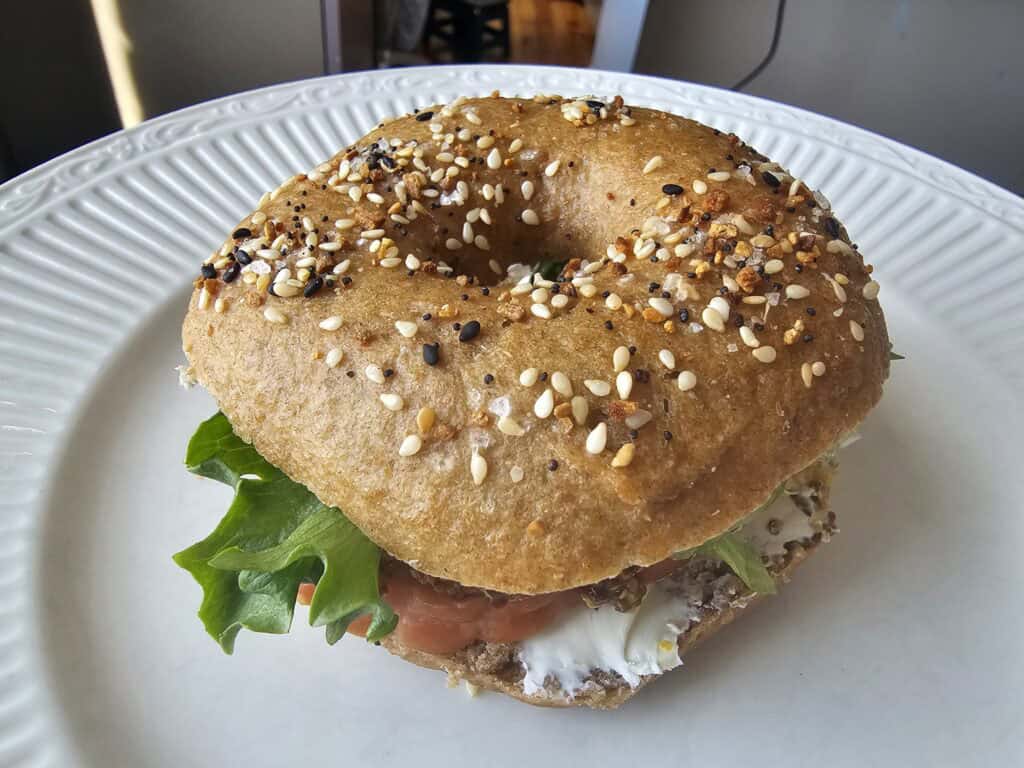
I hope you’ll enjoy making these einkorn sourdough bagels as much as I do. They are chewy, golden brown, and deeply flavorful thanks to slow fermentation and ancient grain einkorn flour. Made with an active sourdough starter, a handful of simple pantry ingredients, and a little patience, this is one of those homemade bagels recipes that quickly becomes a weekly staple.
If you love einkorn sourdough bread, artisan-style baking, or experimenting with einkorn recipes, this simple recipe will fit right into your regular lunch rotation. If you’re short on time and need bagels ASAP, check out my yeast einkorn bagel recipe.
Why You’ll Love These Einkorn Bagels
- Soft interior with a naturally chewy texture
- Made with nutrient-dense ancient grain einkorn flour
- Naturally fermented with einkorn sourdough starter
- Perfect for make-ahead overnight fermentation
- Freezer-friendly for quick breakfasts
- Incredible flavor with just a few simple ingredients
- No preservatives, just real homemade food
These are not just regular bagels—they’re wholesome, nourishing whole grain bagels made from scratch in your own kitchen.
Why I Love Baking with Einkorn Flour
Before we get to the recipe, I want to share a little about why Einkorn has become such a staple in my kitchen.
I first discovered that I seemed to have issues with wheat while travelling doing mission work after high school. Up until that point, I had never given much thought to flour. Bread was bread. Pasta was pasta. I had a couple family members with celiac disease, but I didn’t think it would happen to me, too. Like many people, I assumed that feeling bloated or uncomfortable after eating certain foods was just normal.
During my travels, however, I noticed a pattern. Some meals left me miserable with digestive upset, while others didn’t seem to bother me at all. I went gluten free cold turkey, with the help of a celiac friend on our mission team, an I noticed a slight improvement immediately, and continuing improvement over the following weeks and months.
That discovery sent me down a rabbit trail of learning about grains, traditional food preparation, sourdough fermentation, and ancient varieties of wheat. While Einkorn is certainly not suitable for those with celiac disease because it still contains gluten, many people who struggle with modern wheat find that they tolerate ancient grains differently. Every person is unique, of course, but learning about these older varieties completely changed the way I approached baking.
Years later, Einkorn has become one of my favorite ingredients to work with. We don’t feed our kids gluten free, but I want them to be able to digest the nourishing foods I feed them! Einkorn makes that more realistic.
One thing I especially appreciate is the flavor. Modern flour often fades into the background, but Einkorn brings its own personality to baked goods. It has a rich, slightly sweet, nutty taste that makes everything from pancakes to muffins to sourdough bread taste a little more special.
Another reason I love using Einkorn is that it feels like a connection to a much older way of baking. Einkorn is considered the oldest cultivated wheat in the world, with a history stretching back thousands of years. Unlike modern wheat, which has been extensively hybridized and modified over generations, Einkorn remains much closer to its original form.
I don’t currently mill my own flour, although it is definitely on my homesteading wish list. #goals. For now, I purchase fresh Einkorn flour from a wonderful local mill. There’s something satisfying about knowing exactly where your flour comes from and supporting local farmers and millers in the process. The flour is incredibly fresh, beautifully fragrant, and produces consistently excellent results in baking.
Every time I open a new bag, I’m reminded how different fresh flour smells compared to conventional grocery store flour. It has a warm, wholesome aroma that immediately makes me want to start baking.
If you’re new to Einkorn, don’t be surprised if the dough behaves a little differently than what you’re used to. Einkorn contains a different gluten structure than modern wheat, which means it often creates softer, stickier doughs. It doesn’t always respond well to aggressive kneading or long mixing sessions. If you add a little ground ginger, your end texture is improved! You can skip it, but I highly recommend trying.
The slow fermentation process gives the flour time to fully hydrate while developing incredible flavor. Rather than forcing the dough into submission, you simply allow time to do much of the work.
The result is a bagel that has a wonderful chewy texture on the outside, a soft interior, and a depth of flavor that is difficult to achieve with commercial bagels.
Whether you’re already an avid Einkorn baker or you’re trying it for the first time, I hope these sourdough bagels encourage you to experiment with this remarkable ancient grain. It’s become a beloved ingredient in our home, and I suspect it may become one in yours as well.
Ingredients for Einkorn Sourdough Bagels
This recipe is for 1 dozen bagels. With six sons, I never make less than a dozen (or two) of anything, but you can easily half it if you want.
Bagel Dough
- 850 g einkorn flour (or purpose einkorn flour / freshly milled einkorn berries)
- 400 g water (room temperature or slightly warm)
- 225 g active sourdough starter
- 3 tsp salt
- 3 tsp maple syrup or brown sugar
- 1/2 tsp ground ginger (to aid the gluten structure)
For Boiling
- Large pot of water
- 1 tbsp baking soda
- Optional: 1 tbsp maple syrup
Optional Toppings
- Bagel seasoning
- Poppy seeds
- Sesame seeds
- Everything bagel seasoning
- Flaked salt
Equipment You’ll Need
- Large mixing bowl
- Kitchen scale (for best results)
- Danish dough whisk or stiff spatula
- Baking sheet lined with parchment paper
- Plastic wrap or tea towel
- Large pot of water
- Slotted spoon
- Cooling rack or wire rack
How to Make Einkorn Sourdough Bagels
Mix the Bagel Dough
In a large mixing bowl, combine:
- Water
- Active sourdough starter
- Maple syrup
Stir until mostly dissolved.
Add einkorn flour, ginger and salt. Mix until a shaggy dough forms. This dough will feel stiff compared to modern wheat doughs, but don’t fret, this is normal for einkorn bagels.
Cover with plastic wrap or a damp tea towel and rest for 30–60 minutes at room temperature.
Stretch and Fold or Knead
Over the next 2–3 hours, perform 3–4 sets of stretch and folds.
How to do a stretch and fold: Gently lift one side of the dough and fold it into the center of the dough. Rotate and repeat around the bowl.
Kneading option: Knead for about 5 minutes. Einkorn dough is more delicate than modern wheat dough, so avoid overworking it.
Bulk Fermentation (Overnight Option)
Let the dough rise during bulk fermentation until puffy and slightly airy.
- At room temperature: 4–8 hours
- Cooler house: longer rising time
- Warmer house: faster fermentation
For best flavor, place the dough in the fridge for an overnight cold proof (8–10 hours).
This step deepens flavor and makes shaping easier the next morning.
Shape the Bagels
Turn dough onto a lightly floured surface.
Divide into 12 equal pieces using a kitchen scale for consistency.
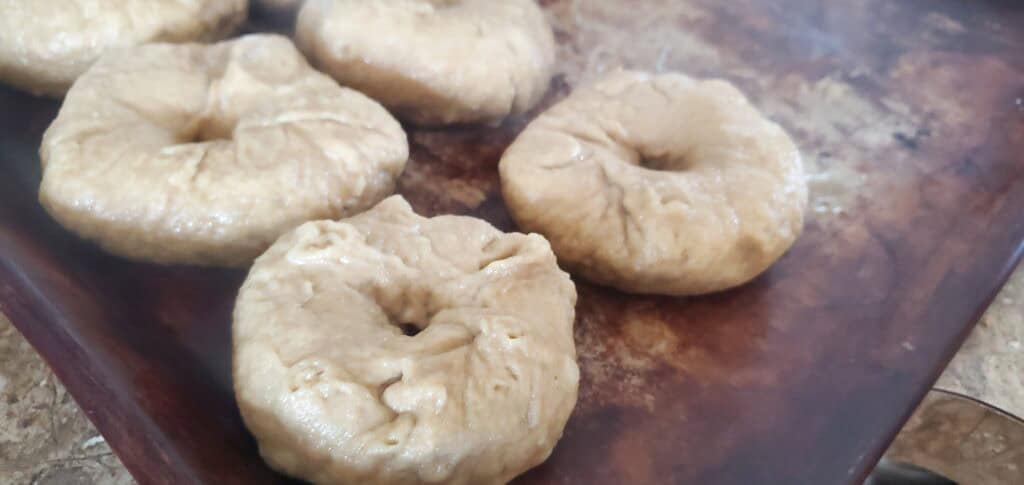
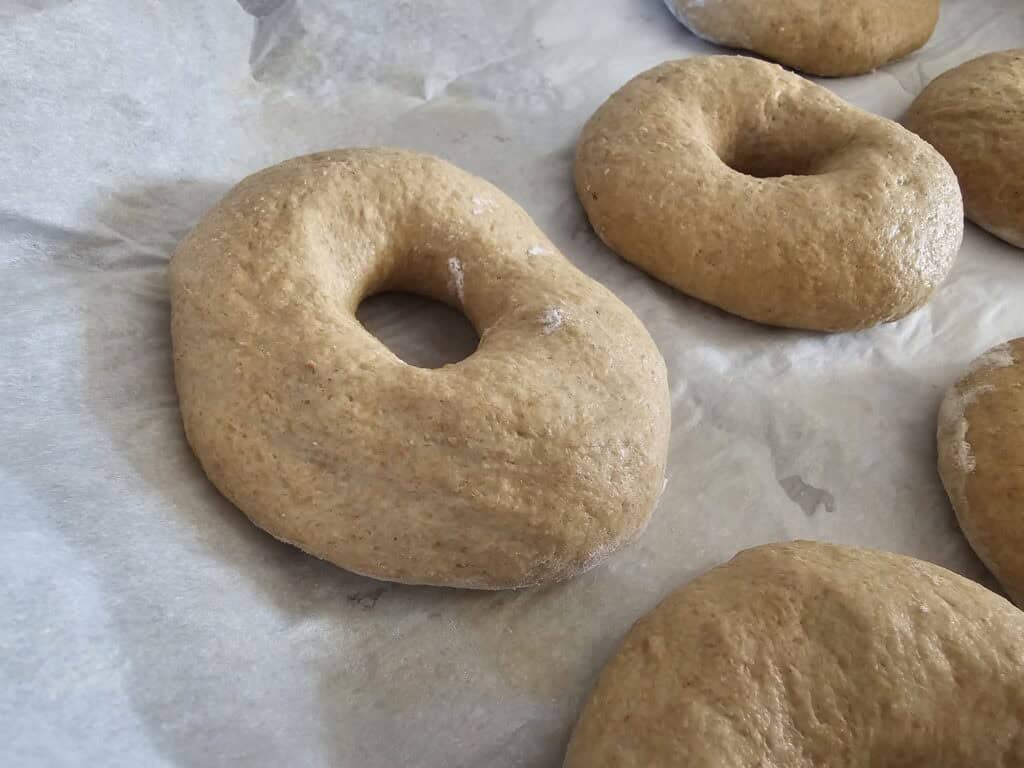
Shape each piece into a tight ball, pulling the top over itself like you are stretching it, then press your fingers through the back into the center of the dough to form the classic bagel shape.
Stretch gently until you have evenly shaped bagels.
Place shaped bagels onto a parchment-lined baking sheet.
Cover with plastic wrap or tea towel and let rise for 1–2 hours.
Boil the Bagels
Bring a large pot of water to a rolling boil.
Add baking soda (and optional maple syrup).
Carefully drop bagels a few at a time into the boiling water using a slotted spoon.
Boil for 1–2 minutes total, flipping halfway through.
This step creates that signature chewy texture and shiny crust.
Remove and place on a baking sheet lined with parchment paper.
Bake
Preheat oven to 425°F.
Transfer boiled bagels to the baking sheet or stone.
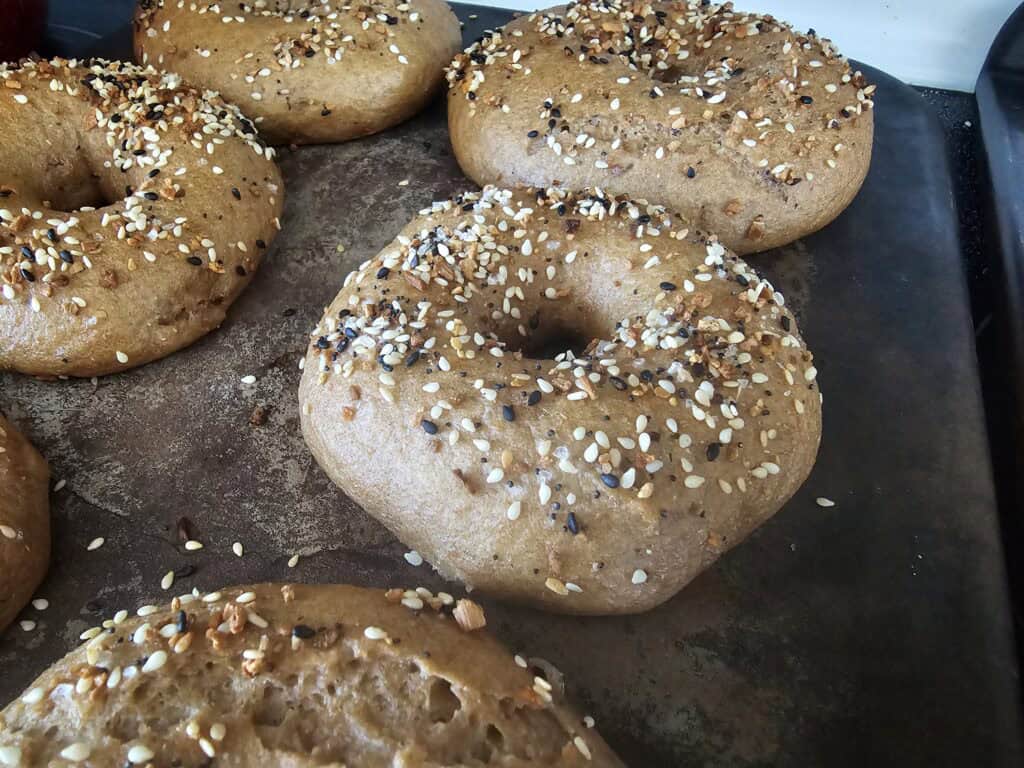
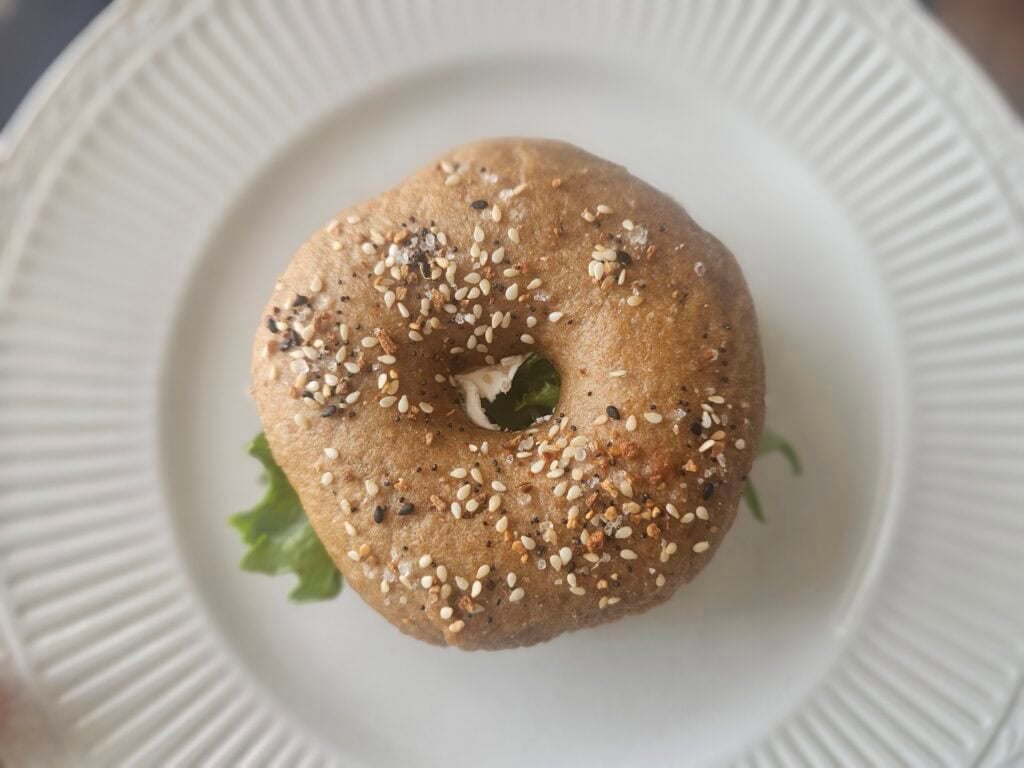
Sprinkle with bagel seasoning or desired toppings.
Bake for 20–25 minutes until golden brown and beautifully risen.
Cool on a wire rack or cooling rack before slicing.
Serving Ideas
These homemade einkorn bagels are incredible with:
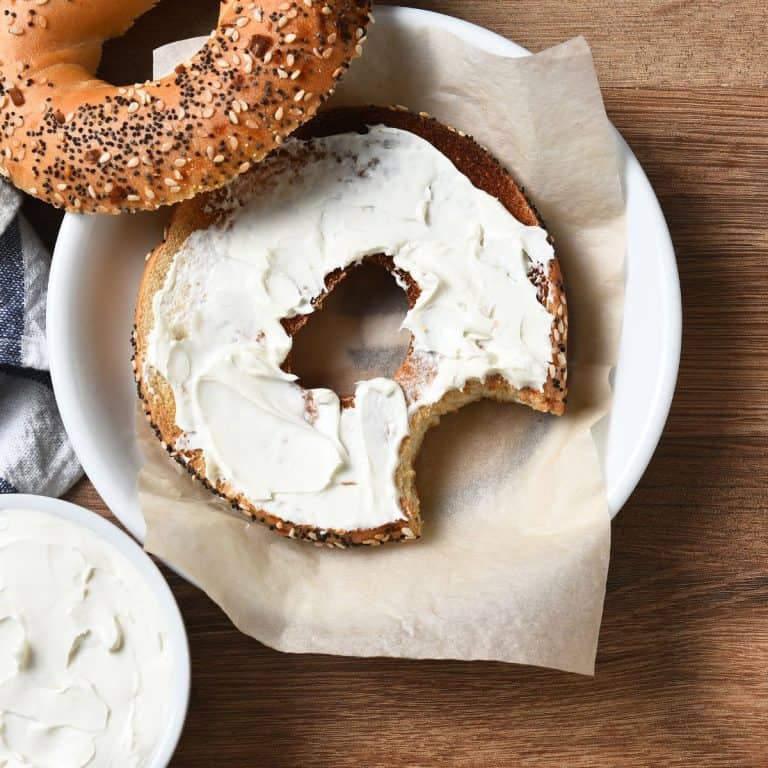
- Cream cheese
- Butter and honey
- Avocado and eggs
- Jam or fruit preserves
- Smoked salmon
- Peanut butter
They’re also amazing toasted the next morning straight from the freezer.
Storage
Store cooled bagels in an airtight container at room temperature for up to 3–4 days.
For longer storage:
- Slice first
- Freeze in bags
- Reheat in toaster from frozen
Troubleshooting Einkorn Bagels
My dough feels too sticky
Einkorn absorbs water differently than modern wheat. Avoid adding too much extra flour. Let it rest instead.
My bagels are dense
Check fermentation time. Under-proofed dough or weak starter can cause dense bagels.
My bagels didn’t float in water
They likely needed longer proofing before boiling.
My dough feels too stiff
This is normal for einkorn bagel dough. It should be firm, not soft.
FAQ
Can I use sourdough discard?
I never let not having fed my starter impact whether or not I make a recipe. However, using unfed starter can totally vary your results, so my official answer is: for best results, use an active sourdough starter.
Can I use einkorn berries?
Yes, I’m jealous! Freshly milled einkorn berries or einkorn flour both work well.
Can I skip boiling?
You can, but I would definitely not recommend it as you will lose the classic chewy texture and shiny crust.
Are einkorn bagels gluten-free?
No. Einkorn is an ancient grain but still contains gluten.
These einkorn sourdough bagels are the perfect balance of tradition and simplicity. With just a few ingredients, a bit of fermentation time, and a hot oven, you get fresh, chewy, golden homemade bagels that feel like a true kitchen win.
User beware! Once you make your own bagels, it’s hard to go back to anything else.
Sourdough Einkorn Bagels
These easy homemade sourdough bagels with Einkorn flour are chewy, flavorful, and naturally fermented with an active sourdough starter. Made with wholesome ancient grain flour and simple ingredients, they're perfect toasted with cream cheese or topped with your favorite bagel seasoning.
Ingredients
- For Boiling
- Large pot of water
- 1 tablespoon baking soda
- 1 tablespoon maple syrup or honey
- For the Bagel Dough
- 850 g Einkorn flour
- 400 g water
- 225 g active sourdough starter
- 3 teaspoons salt
- 3 teaspoons maple syrup or honey
- Optional Toppings
- Everything bagel seasoning
- Poppy seeds
- Sesame seeds
- Flaked sea salt
- Dried onion
- Dried garlic
Instructions
Instructions
Mix the Dough
In a large mixing bowl, combine the water, active sourdough starter, and maple syrup. Stir until the starter is mostly dissolved.
Add the Einkorn flour and salt. Mix with a Danish dough whisk, stiff spatula, or your hands until no dry flour remains and a shaggy dough forms.
Cover with plastic wrap or a damp tea towel and let rest for 30 minutes.
Stretch and Folds
Perform 3 to 4 rounds of stretch and folds, spaced 30 minutes apart.
To do this, gently lift one side of the dough and fold it toward the center of the dough. Rotate the bowl and repeat until all sides have been folded.
Because Einkorn dough is softer than modern wheat dough, use a gentle touch.
Bulk Fermentation
Cover the dough and allow it to rise at room temperature until noticeably puffy and airy.
Depending on your kitchen temperature and the strength of your starter, bulk fermentation may take 4 to 8 hours.
For even more flavor, refrigerate the dough overnight and continue shaping the next morning.
Shape the Bagels
Transfer the dough to a lightly floured surface.
Divide into 12 equal pieces.
Shape each piece into a tight ball. Press your thumb through the middle of the ball and gently stretch the opening to create a bagel shape.
Place the shaped bagels onto a parchment-lined baking sheet.
Cover and allow to rise for 1 to 2 hours, or until slightly puffy.
Boil the Bagels
Preheat the oven to 425°F.
Bring a large pot of water to a rolling boil.
Add the baking soda and maple syrup.
Using a slotted spoon, carefully lower each bagel into the boiling water.
Boil for approximately 30 to 60 seconds per side.
For a softer bagel, use a shorter boil. For a chewier texture, boil a little longer.
Remove and place back onto the baking sheet.
While still damp, sprinkle with your favorite toppings.
Bake
Bake in a preheated oven for 20 to 25 minutes, or until golden brown.
Transfer to a cooling rack and allow the bagels to cool before slicing.
Notes
Storage
Store cooled bagels in an airtight container at room temperature for up to 4 days.
For longer storage, freeze for up to 3 months and toast directly from frozen.
Notes
- Freshly milled Einkorn berries or all-purpose Einkorn flour both work well.
- If your house is cool, expect a longer rising time.
- If your house is warm, fermentation may happen more quickly.
- Bagel dough is naturally stiffer than most bread doughs.
- Boiling is what creates the classic chewy texture and shiny crust.
Nutrition Information:
Serving Size:
1 bagelAmount Per Serving: Calories: 290 kcalTotal Fat: 1.4 ggSaturated Fat: 0.2 ggTrans Fat: 0 g gUnsaturated Fat: 1.1 ggCholesterol: 0 mgmgSodium: 590 mgmgCarbohydrates: 59 ggNet Carbohydrates: ~51 ggFiber: 8 ggSugar: 1 ggSugar Alcohols: 0 ggProtein: 12 gg
Pin this post for later!
If you liked this post, please consider sharing it with a friend or pinning to Pinterest so others can find it and enjoy it!
Check out some of my recent posts:
- How to Celebrate St. Luke’s Little Summer: An October Tradition
- Best St. Luke the Evangelist Free Colouring Page for Kids
- A Words for Kindergarten: Letter A Vocabulary Free Printable
- July: The Month of Devotion to the Precious Blood of Jesus
- Van Gogh Psalm 23 Printable: Free Christian Wall Art
Come check out our new group, Kindling Wild Community, where we can connect!