
The Basics of Raising Rabbits on the Homestead
Spring is just around the corner, and it is the perfect time to start raising rabbits on your homestead. Whether you’re interested in raising meat rabbits, producing rabbit meat, or simply adding productive animals to your property, spring gives you time to get through the learning curve before the hot weather and winter months arrive.

If you’re dreaming about producing your own meat in a small space, homestead rabbits are truly a great option — even for suburban areas and small farms.
Rabbits make fun pets and they are also great for lean meat, gorgeous pelts, and some breeds are even good for hair/fibre (looking at you, angora bunnies!). They are an extremely easy, cost effective, and family-friendly addition to your homestead. And they are so cute! Continue reading to find out if rabbits are a good fit for your homestead.
Selling bunnies is also a great project for kids, and their manure is an amazing fertilizer for your garden. We love the manure for a bountiful harvest. My sons even sold rabbit poop fertilizer at a homeschool fair once along with their tomato plants.
Let’s walk through everything you need to know before bringing home your first rabbits.
Why Raising Rabbits Is a Good Idea
Rabbits are one of the most practical animals you can raise for meat production. They’re quiet, efficient, and don’t require much space compared to meat chickens or larger livestock.
1. Healthy Meat for Your Family
Rabbit meat is lean, high in protein, and easy to digest. It tastes comparable to a flavorful chicken. Many homesteaders choose meat rabbit breeds like New Zealand, Californian, or Standard Rex because they produce a good amount of pounds of meat without taking up much space.
If you’re looking to raise your own meat in a small barn, backyard rabbit hutch, or even wire cages in a shed, rabbits make sense. Larger breeds like Flemish Giants are impressive but often produce less meat proportionally compared to traditional meat breeds.
For families wanting steady meat production on a regular basis, breeding rabbits can provide a consistent supply of healthy meat, year after year. Our family likes to eat rabbit once a week.
2. Low Space Requirements
One of the biggest reasons people start raising rabbits is that they don’t need much space. You can even have rabbits on an urban or suburban lot.
Each rabbit should have enough room to turn around comfortably and stretch out. Many breeders recommend:
- 24×30 inches minimum for standard breeds
- More square feet for larger breeds
You can house rabbits in:
- Individual cages
- Wire cages with wire floors
- A rabbit hutch
- Mobile rabbit tractors
- Or even a colony system (though that comes with its own learning curve)
If you’re working with a small space, rabbits are often easier to manage than chickens.
3. Rabbit Manure Is Garden Gold
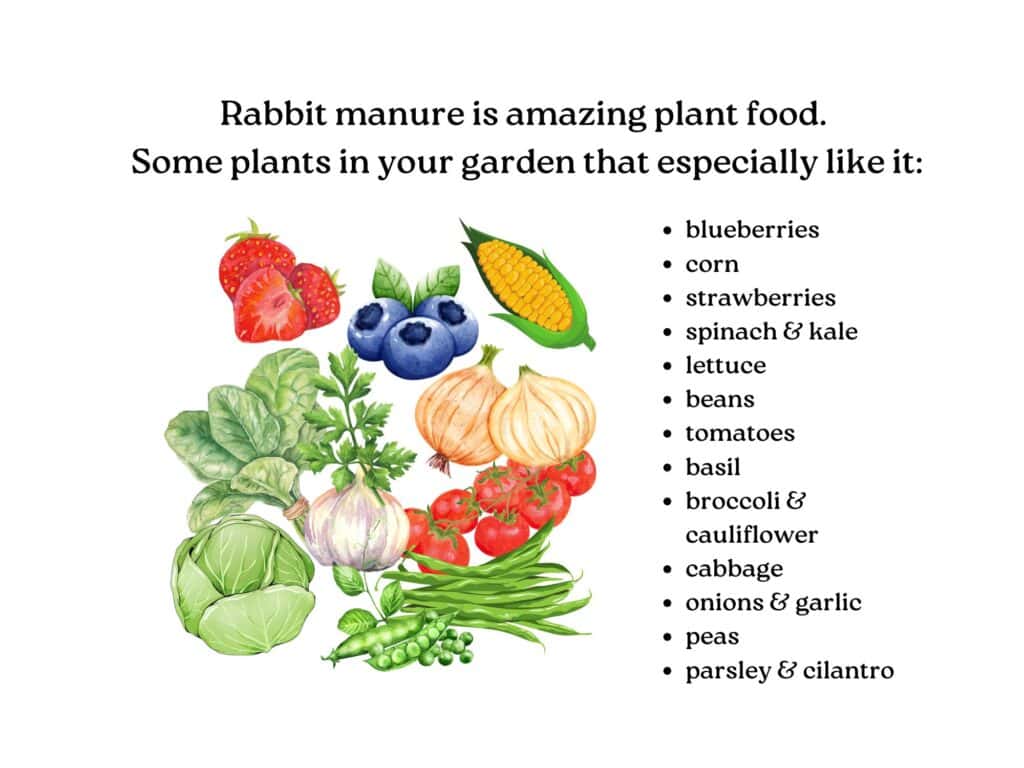
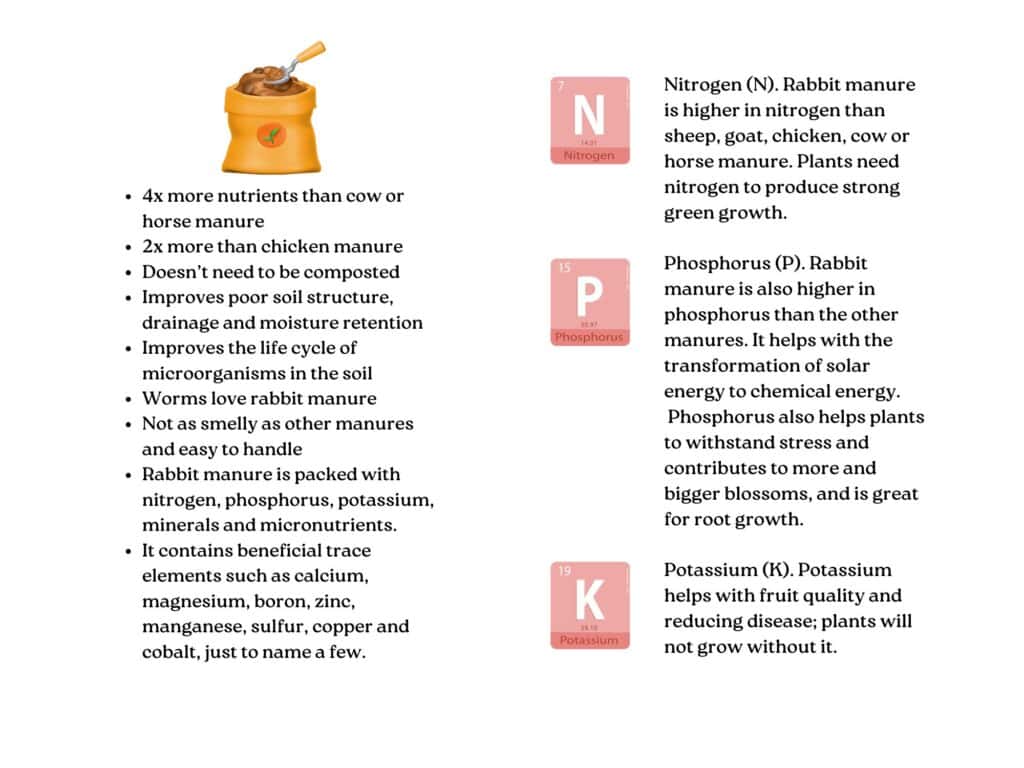
Rabbit manure (rabbit droppings) is one of the only manures you can apply directly to your garden without composting first. It’s called a cold manure.
It’s balanced, gentle, and wonderful for sweet potatoes, tomatoes, and leafy greens like romaine lettuce. Many homesteaders sell rabbit manure locally as an added income stream.
Equal parts bedding and droppings break down beautifully in the garden.
In our garden, we have noticed that it has really benefitted our elderberry trees, blueberry bushes, peas, tomatoes, onions and garlic.
Choosing the Right Meat Rabbit Breeds
There are many domestic rabbits, but not all are ideal for meat production.
Popular meat rabbit breeds include:
- New Zealand
- Californian
- Standard Rex
- Heritage breeds selected for meat production
In Canada, you can typically get your rabbits for $20-30 per bun, or $15-20 US but some can be much more. Starting with a breeding trio is ideal, which means a buck and two does.
When purchasing breeding stock, look for:
- Healthy coats
- Clear eyes
- Strong body type
- Good weight gain in grow outs
Young bucks and does should be at least a few months of age before breeding. Most breeds reach breeding age around 5–6 months of age, depending on size.
Housing: Rabbit Cages, Hutches, and Setup
Before bringing home your first rabbits, have your setup ready.
Shelter
A great place for your rabbitry includes:
- Shade during hot weather
- Protection from wind in winter time
- Good ventilation
- Dry flooring
Many breeders use wire cages with wire floors to keep conditions clean and reduce health issues. However, wire floors can sometimes cause sore hocks, so using a cage mat or ceramic tile resting board is helpful.
Avoid chicken wire for flooring — it’s not strong enough. Use proper building material designed for rabbits.
Each rabbit needs enough room and clean water daily.
Feeding and Nutrition
Rabbits require:
- Food: pellet and hay, or only pellet.
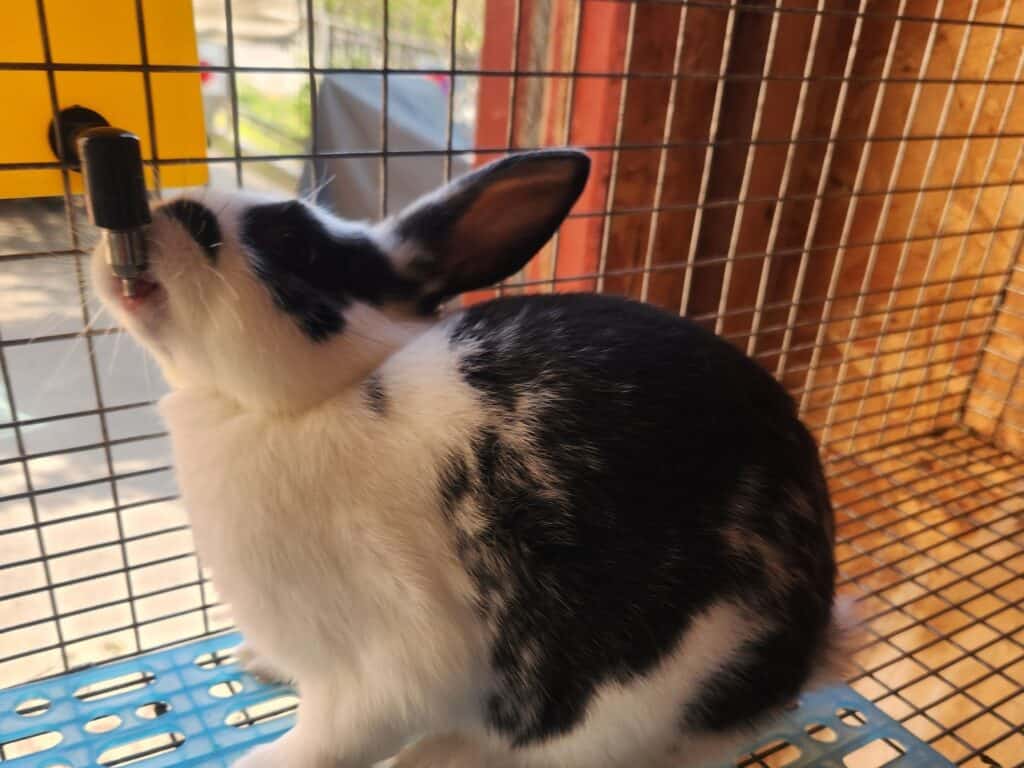
- Clean water in water bottles or crocks
- Occasional treats of safe fruits and vegetables
There is a whole debate on pallet only vs. pellet and hay! Some meat breeders prefer to keep it streamlined and simple with only pellet. Others like using hay. Some keep rabbits on grass. We have done pellet and hay, as well as just pellet. This is a solid discussion of both sides of the pellet/hay argument. Make sure you are using a proper high quality pellet from the feed store and whatever you do, do not feed the junky pellets from the pet store!
In my opinion, a high quality, balanced rabbit pellet from a quality feed store simplifies meeting protein and fiber needs, especially for breeding rabbits and grow outs. If it is easy for you to access hay, then go for it.
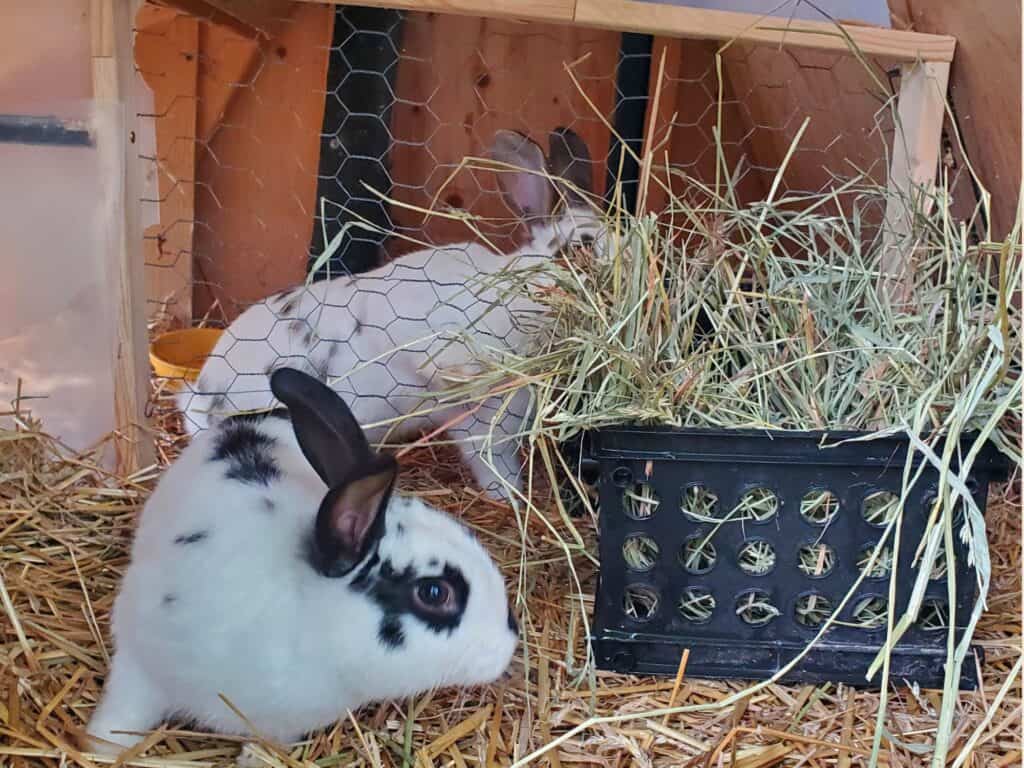
Breeding Rabbits & Kindling Basics
One of the reasons raising meat rabbits is efficient is their short gestation period.
The gestation period is typically 28–32 days.
Nest Box Preparation
A nest box (or nesting box) must be placed in the doe’s cage around Day 27–28.
The nest box should:
- Be large enough for her to turn around
- Have a small front lip
- Contain straw or grass hay
The doe will line the nest box with fur before kindling.
Baby rabbits (kits) are born hairless, blind and helpless. Most does feed them only once or twice daily — this is normal.
Check the nest box daily the first week. Keep bedding clean and dry.
Around 3–4 weeks, remove the nest box.
Weaning usually happens at 6–8 weeks.
As soon as they can leave their mother, it is essential to separate young rabbits by gender to prevent accidental breeding.
Health and Common Issues
Monitor rabbits regularly for:
- Sore hocks
- A sick rabbit that isolates or stops eating
- Nest box eye (in young kits)
- Overheating during hot weather
- Frostbite in winter months
Clean cages on a regular basis. Ensure enough room to prevent stress behaviors.
Rabbits thrive in small space systems if managed properly, but overcrowding causes health issues.
The Learning Curve
Raising rabbits does have a learning curve, which we certainly experienced. You may lose a litter. You may make mistakes your first time, but rabbits are forgiving animals overall.
They reproduce quickly, grow efficiently, and provide much meat for very little input compared to many livestock options. We found having 1 buck and 3 does was a good rhythm for our family.
Baby Rabbits: What to Expect From Birth to Butcher (or Breeding)
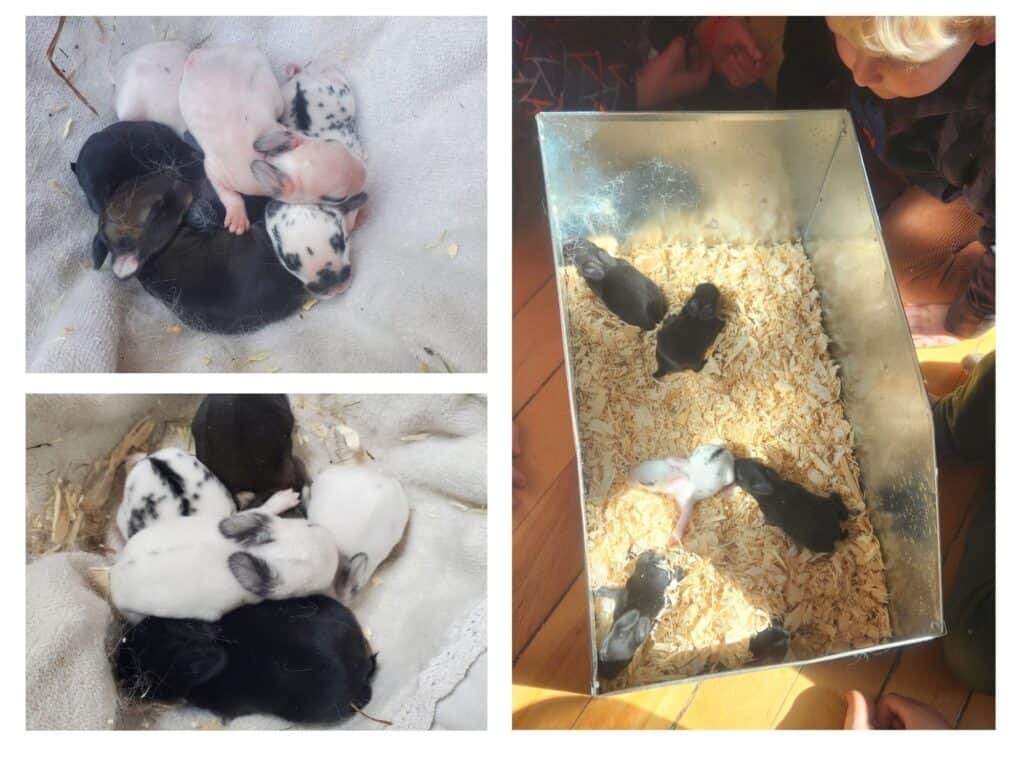
At Birth (Day 0)
Baby rabbits are born: Hairless, blind, deaf & completely dependent on the mother. A healthy litter can range anywhere from 4–12 baby rabbits.
Immediately after kindling (but not too soon as to interrupt momma):
- Check the nest box
- Remove any stillborn kits
- Make sure all babies are grouped together
- Ensure the nest is dry and well insulated with fur and hay
Sometimes a doe will reject a kit. You can try to put the kit back with the others but she may continue to reject it on instinct.
Feeding: The Biggest Surprise for First-Time Rabbit Breeders
One of the most common concerns the first time someone raises baby rabbits is thinking the doe isn’t feeding them.
Here’s what’s normal:
- The mother feeds once or twice a day.
- She usually does it at night.
- She does not stay in the nest box.
This is totally normal, instinctual behaviour for the doe. Remember that rabbits are prey animals, in the wild, staying away from the nest protects the litter from predators.
How to tell if baby rabbits are fed:
- They will have round, full bellies
- Smooth skin (not wrinkled)
- They’ll feel warm to the touch
- Quiet and piled together vs stressed and mewing
Hungry kits, you can’t miss. They will look wrinkled, feel cool, and cry.
Days 3–5: Fur Begins
By day 3–5:
- A light fuzz begins covering their bodies.
- You’ll start seeing their true color.
- They become stronger and more active.
Continue checking the nest box daily but avoid excessive handling.
Clean, dry conditions are critical for their immune system development.
Day 10: Eyes Open
Around 10 days old:
- Eyes open.
- They begin crawling out of the nest box occasionally.
- They start looking like tiny rabbits instead of pink beans.
Make sure:
- The buck’s cage is separate (no accidental breeding later).
- The doe has enough room.
- There are no sharp wire floors or gaps where small kits can slip through.
2–3 Weeks: Exploring and Nibbling
At this stage:
- Baby rabbits start nibbling hay.
- They may sample rabbit pellet.
- They hop confidently around the cage.
Keep high-quality grass hay available at all times. If the doe is nursing, alfalfa hay supports her protein needs.
This is also when you begin noticing personality differences among young rabbits.
3–4 Weeks: Nest Box Removal
Around 3–4 weeks:
- Kits no longer need the nest box.
- They are eating solid food regularly.
The nest box can become a bathroom if left in too long.Removing it helps maintain hygiene and prevent health issues.
6–8 Weeks: Weaning Time
Weaning typically happens between 6–8 weeks.
At this point:
- Baby rabbits are fully eating solid food.
- They are ready for separation by gender.
- You decide which rabbits are grow outs and which might be future breeding stock.
In meat production systems, grow outs are typically processed between 8–12 weeks, depending on meat rabbit breeds and target pounds of meat.
Common Baby Rabbit Problems
1. Nest Box Eye
This is common in baby rabbits and shows up as:
- Swollen eyelids
- Discharge
- Eyes sealed shut
It’s often caused by bacteria in damp bedding. Keep the nest box clean and dry.
2. Chilling
Baby rabbits chill easily, especially in winter months.
If you find a cold kit outside the nest box:
- Warm it slowly against your body.
- Return it once active and warm.
Never assume a cold kit is dead until fully warmed.
3. Enteritis (Digestive Trouble)
As young rabbits transition to solid food, digestive upset can occur.
Prevent issues by:
- Providing consistent feed
- Avoiding sudden diet changes
- Offering quality commercial feed or balanced whole grains
- Keeping water bottles clean
Clean water daily is essential.
Managing Baby Rabbits in Different Seasons
Winter Time
In winter time, rabbits tend to be just fine. We get extreme winters here in Northern Ontario, but the breeds we have kept have been completely hardy for winter in their cozy rabbit furs. It is essential to shield cages from wind (yet allow for ventilation) and to ensure waters don’t freeze. We kept extra waterers and changed them out regularly. If you are kindling in winter, be sure to provide extra bedding in the nest box, and be aware that while mom typically keeps kits cozy in there, sometimes nature happens and more kits may die from cold exposure.
Baby rabbits tolerate cold better than extreme heat.
Hot Weather
Heat is more dangerous for rabbits than cold. Ideally, their hutch has some shade in summer and plenty of ventilation. They also need plenty of fresh water. A cold stone or ceramic tile can also help cool them in summer. If you notice droopy ears, they are hot!
Baby rabbits overheat quickly, but we haven’t had any probems in summer where we live. One summer, we did think our buck experienced temporary infertility due to the heat, but he got over it come cooler weather and we were able to have litters again.
Selecting Future Breeding Stock
When evaluating baby rabbits to keep:
Look for:
- Strong growth rate
- Good muscling
- Straight legs
- Clean eyes
- Calm temperament
Avoid keeping:
- Runts
- Chronic sick rabbit history
- Poor feed conversion
Careful selection of your breeding stock should improve your meat production the following year.
How Much Meat Do Baby Rabbits Produce?
By 8–12 weeks, standard meat breeds like New Zealand or Californian typically reach fryer weight.
Expect approximately:
- 4–6 pounds live weight
- 2–3 pounds of meat processed
Rabbits are easy to butcher and prepare. Their meat is delicious and I would love to share some of my favourite rabbit recipes in future posts. Let me know in comments if you need ideas!
Larger breeds may take longer and sometimes yield less meat proportionally.
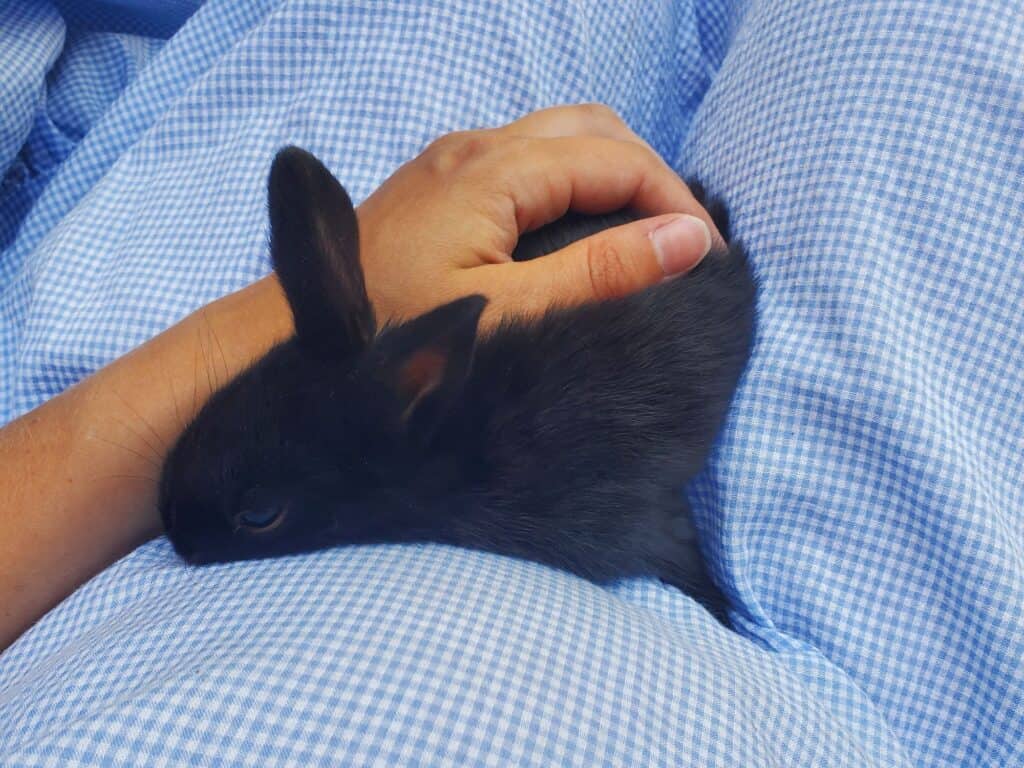
Random facts about rabbits:
- Rabbits cannot vomit. This is why their digestive health is such a big deal. Once something is in their system, it has to keep moving through properly.
- Rabbits are crepuscular. That means they are most active at dawn and dusk. If you ever notice your rabbits zooming around early in the morning or in the evening, that is completely normal.
- Rabbits communicate a lot through body language. Thumping their back feet usually means they are startled or warning others of danger. A relaxed rabbit will stretch out or even flop dramatically onto its side.
- Rabbits can see nearly 360 degrees around them. Their eyes are positioned on the sides of their heads, which helps them watch for predators. They do have a small blind spot directly in front of their nose.
- A rabbit’s teeth never stop growing. They need constant access to hay or safe chew materials to keep their teeth worn down naturally.
- Rabbits groom themselves often, much like cats. You will see them licking their paws and smoothing their ears and face.
- A happy rabbit might do something called a “binky.” This is when they jump in the air and twist their body mid-leap. It is basically pure joy in motion.
- Baby rabbits are called kits. A group of baby rabbits from the same birth is called a litter.
- A female rabbit is called a doe, a male is called a buck.
- Rabbits have very strong back legs. They can kick hard enough to injure themselves if they panic while being held, which is why proper handling is important, especially for children.
- Their ears are not just for hearing. Rabbits use their ears to regulate body temperature by releasing heat. This is another reason why they struggle in very hot weather.
- Rabbits are very clean animals. They usually choose one area to use as a bathroom, which makes litter training possible in some setups.
- Wild rabbits and domestic rabbits are different. Most domestic breeds come from the European rabbit species, while wild cottontails in North America are a different type entirely.
- Rabbits have a unique digestive process called cecotrophy, where they re-ingest special soft droppings to absorb extra nutrients. It may look odd, but it is completely normal and necessary for their health.
Raising Meat Rabbits With Kids
If you are raising meat rabbits, baby rabbits are also where children begin understanding food production.
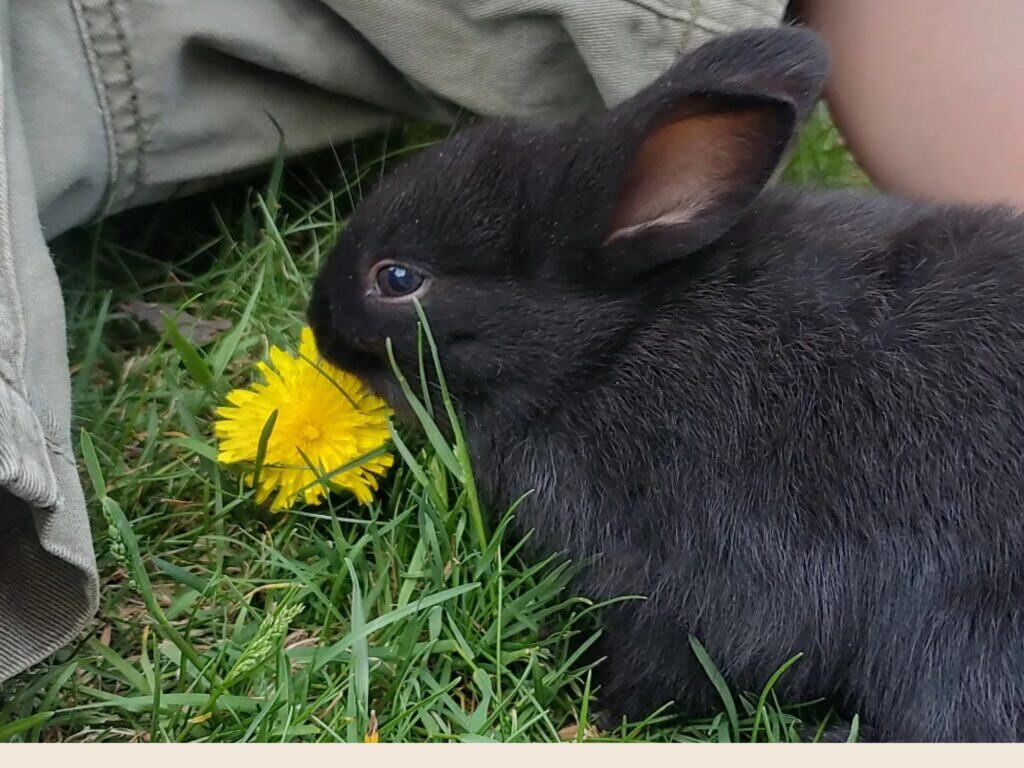
We are very honest in our home about the good old circle of life!
Some baby rabbits will become breeding stock, some will be sold locally, and most will be grow outs for meat production. All of them deserve good care.
Kids are capable of helping with a lot of tasks in a rabbitry. Get them to help:
- Refresh water bottles with clean water
- Refill hay
- Check nest boxes
- Observe behavior
- Gently handle rabbits when appropriate *wear long sleeves to avoid being scratched by cranky does!
Your kids will learn that the males tend to be friendlier than the females. That baby bunnies are the cuddliest of all! They learn that healthy meat starts with daily chores in a small space, in rabbit cages that must stay dry and well managed. They see that a doe needs plenty of protein to support nursing. They learn what a gestation period is, can mark breeding dates on the calendar, help set up nest boxes, clean waste and add it to the garden to turn it into more food!
Why Baby Rabbits Are Such a Great Option for Homeschoolers
Baby rabbits check so many educational boxes:
- Life cycles
- Mammal reproduction
- Nutrition and protein needs
- Business math (selling breeding stock or extra kits)
- Garden science (using rabbit manure)
- Responsibility and routine
Final Thoughts
When you zoom out, raising meat rabbits follows a nice rhythm!
They need:
- Clean water every day
- Enough room to stay comfortable and healthy
- Good quality feed
- Proper housing for both summer heat and winter months
- Intentional, well-planned breeding
And in return, they offer healthy meat in a small space.
Rich rabbit manure for the garden.
A hands-on education for your kids.
A steady, sustainable protein source. Cuddles, fun and learning.
Whether you’re in suburban areas, on small farms, or tucked into a full homestead, raising rabbits is such a great option for families who want to live a little closer to their food.
From nest box peeks with excited children… taking care of the baby bunnies, taking pictures when they are at peak cuteness, grow outs filling the freezer, tasty pulled rabbit in the instant pot, and garden beds thriving from rabbit droppings — it all works together so beautifully.
It’s practical, productive…. And fluffy and delightful. Let me know if you decide to take the leap!