
Make Your Own Pasta
There’s something incredibly satisfying about making pasta from scratch. With just a few simple ingredients, you can turn flour and eggs into soft, silky noodles that taste far better than anything from a box. The texture is richer, the flavor is deeper, and the whole process feels like a small act of creativity in the kitchen.
If you’ve never tried making your own pasta before, it might seem intimidating at first. In reality, it’s surprisingly simple. Once you learn the basics, the process becomes almost second nature, and many people find it relaxing and even a little therapeutic. Kneading the dough, rolling it thin, and shaping it into noodles is a wonderful way to slow down and enjoy the rhythm of cooking.
Fresh pasta is perfect for a cozy family dinner, a special weekend meal, or simply for the joy of learning a traditional kitchen skill. In this guide, we’ll walk through the entire process—from mixing the dough to cooking the finished pasta—so you can confidently make your own at home.
The Joy of Homemade Pasta
Cooking from scratch connects us to food in a different way. When you make pasta by hand, you begin to appreciate just how simple and beautiful traditional cooking can be.
Many cultures have their own versions of fresh pasta, and the techniques have been passed down through generations. While pasta machines and modern equipment can make the process faster, the basic method has remained the same for hundreds of years: flour, eggs, patience, and a bit of practice.
Homemade pasta also has a texture that is difficult to replicate with store-bought noodles. Fresh pasta is tender yet slightly chewy, and it absorbs sauces beautifully. Even a simple drizzle of olive oil and a sprinkle of parmesan can turn fresh pasta into something truly special.
Another wonderful thing about making pasta at home is how versatile it is. Once you know how to make the dough, you can create countless shapes and dishes. From long ribbons of fettuccine to delicate ravioli filled with cheese or vegetables, the possibilities are endless.
What You’ll Need
One of the best parts about homemade pasta is how few ingredients it requires. Most of what you need is probably already in your kitchen.
Flour is the foundation of the dough. Regular all-purpose flour works perfectly well for homemade pasta. If you want a more traditional Italian texture, you can try using “00” flour, which is finely milled and creates very smooth pasta. Some cooks also like to mix semolina flour with all-purpose flour for a slightly firmer bite.
Eggs provide richness and structure to the dough. Fresh eggs at room temperature are ideal because they blend more easily with the flour. The eggs are what give homemade pasta its beautiful golden color and tender texture.
A pinch of salt helps enhance the flavor of the dough. While the pasta will also cook in salted water later, adding a little salt to the dough itself adds depth to the final result.
You’ll also need a few basic tools. A rolling pin works perfectly if you plan to roll the dough by hand. If you have a pasta machine, it can help you achieve very thin sheets with less effort. A sharp knife or pasta cutter is useful for shaping the noodles.
Step 1: Making the Dough
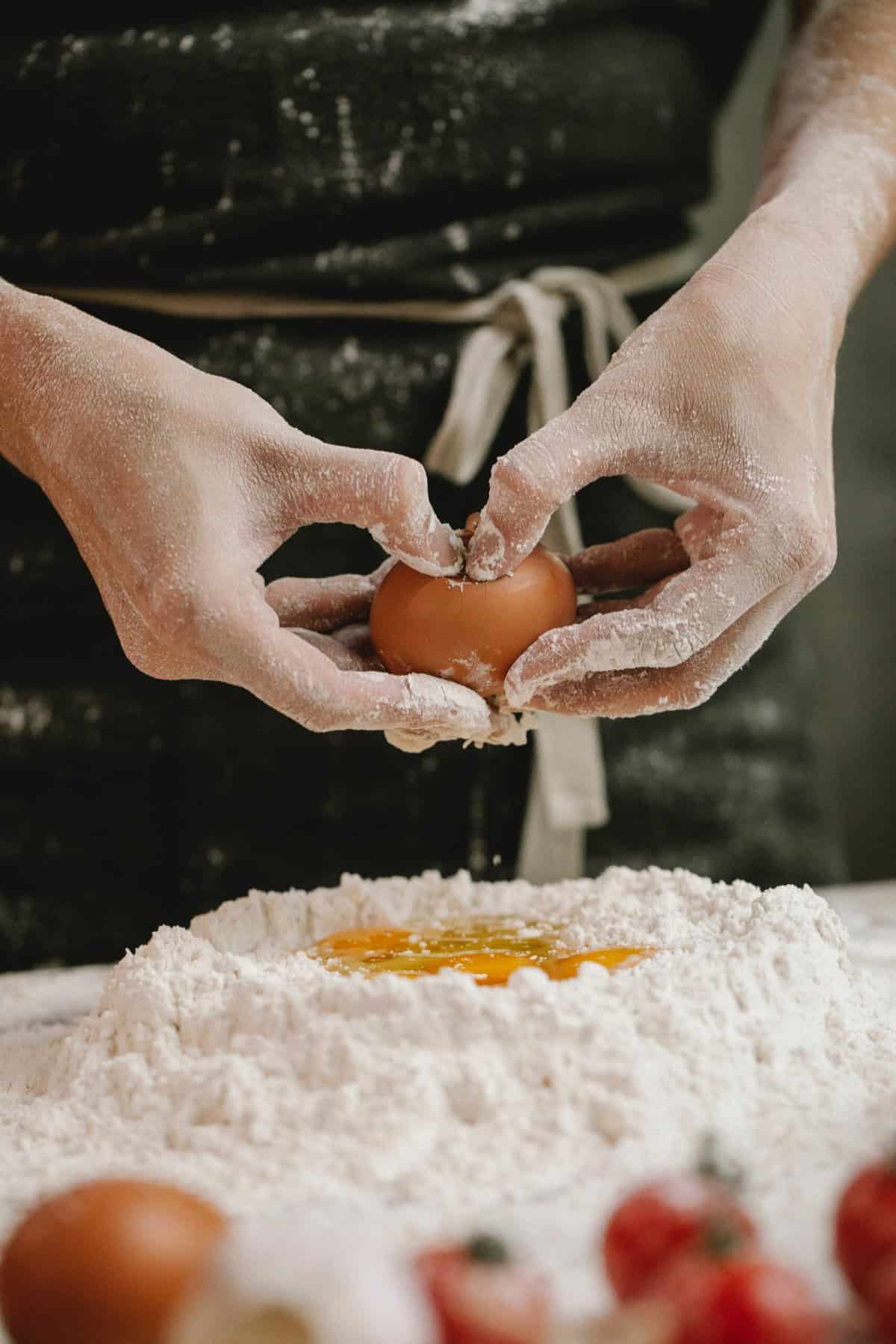
Start by placing your flour on a clean countertop or large cutting board. Shape the flour into a mound and create a small well in the center. Crack the eggs into this well and add a pinch of salt.
Using a fork, gently beat the eggs while slowly pulling flour from the edges of the mound into the center. Continue mixing until the dough begins to come together into a shaggy mass.
At this point, switch to using your hands. Begin kneading the dough by pressing it forward with the heel of your hand, folding it over, and repeating the process. Kneading develops the gluten in the flour, which gives pasta its elasticity and strength.
This step usually takes about 8 to 10 minutes. The dough should gradually become smooth, slightly firm, and elastic. If the dough feels too sticky, sprinkle on a little more flour. If it seems too dry and crumbly, you can add a tiny splash of water.
Step 2: Resting the Dough
Once the dough is smooth and well kneaded, wrap it in plastic wrap or cover it with a bowl and let it rest at room temperature for about 30 minutes.
This resting period is an important step that many beginners skip. Resting allows the gluten to relax, which makes the dough much easier to roll out later. If you try to roll the dough immediately, it will tend to spring back and resist stretching.
During this time, you can prepare your workspace and gather any tools you’ll need for shaping the pasta.
Step 3: Rolling Out the Dough
After resting, cut the dough into four smaller pieces. Working with smaller sections makes the dough much easier to manage. Keep the pieces you are not using covered so they do not dry out.
If you are rolling the dough by hand, flatten one piece slightly and use a rolling pin to roll it into a thin sheet. Turn the dough frequently and lightly dust it with flour to prevent sticking. The goal is to roll the dough very thin—thin enough that you can almost see your hand through it.
If you are using a pasta machine, begin by passing the dough through the widest setting. Fold the dough in half and run it through again several times. This helps create a smooth and even sheet.
Gradually adjust the machine to thinner settings, passing the dough through each level until you reach your desired thickness.
Step 4: Shaping the Pasta
Once your pasta sheets are rolled out, it’s time to turn them into noodles or shapes.
For long noodles like fettuccine or tagliatelle, lightly dust the pasta sheet with flour and roll it loosely into a log. Use a sharp knife to slice the roll into thin strips, then gently unravel the noodles.
You can also cut the dough into squares for ravioli or small rectangles for lasagna sheets. With a little creativity, you can experiment with many different pasta shapes.
Fresh pasta can be cooked right away or allowed to dry slightly on a floured surface while you finish shaping the rest of the dough.
Step 5: Cooking the Pasta
Cooking fresh pasta is quick and simple. Bring a large pot of water to a rolling boil and add a generous amount of salt. The water should taste slightly salty, like the sea.
Drop the pasta into the boiling water and cook for about two to four minutes. Fresh pasta cooks much faster than dried pasta, so keep an eye on it. The noodles should be tender but still have a slight bite.
Once cooked, drain the pasta and toss it immediately with your sauce of choice.
Simple Serving Ideas
Fresh pasta is incredibly versatile and pairs beautifully with simple sauces. Because the noodles themselves have so much flavor, you don’t need anything complicated.
A classic marinara sauce works beautifully with homemade pasta, as does fresh pesto made with basil, garlic, olive oil, and parmesan. Even a simple combination of butter or olive oil, garlic, and grated cheese can make a delicious meal.
Adding roasted vegetables, sautéed mushrooms, or a little grilled chicken can turn your homemade pasta into a complete and satisfying dish.
The Reward of Homemade Pasta
Making pasta from scratch is one of those kitchen skills that feels both traditional and rewarding. The first time you try it, the process might feel a little messy or unfamiliar. But with each attempt, it becomes easier and more intuitive.
Before long, you may find yourself making fresh pasta whenever you want something comforting and delicious.
There’s something special about sitting down to a meal that you created entirely by hand. Homemade pasta carries a sense of care and craftsmanship that you simply can’t buy at the store.
If you decide to try making your own pasta, enjoy the process and don’t worry about perfection. Each batch will teach you something new, and every plate will be delicious in its own way.
If you try this at home, feel free to share your favorite pasta shapes or sauce combinations. Homemade pasta is meant to be enjoyed and shared, and every cook develops their own style along the way.
Buon appetito!


I have always wanted to know how to make my own pasta! I can\’t wait to try this!
You\’ll have to report back once you try it! Would love to hear about your experience!
Testing another reply
Test subreply
This was delicious!