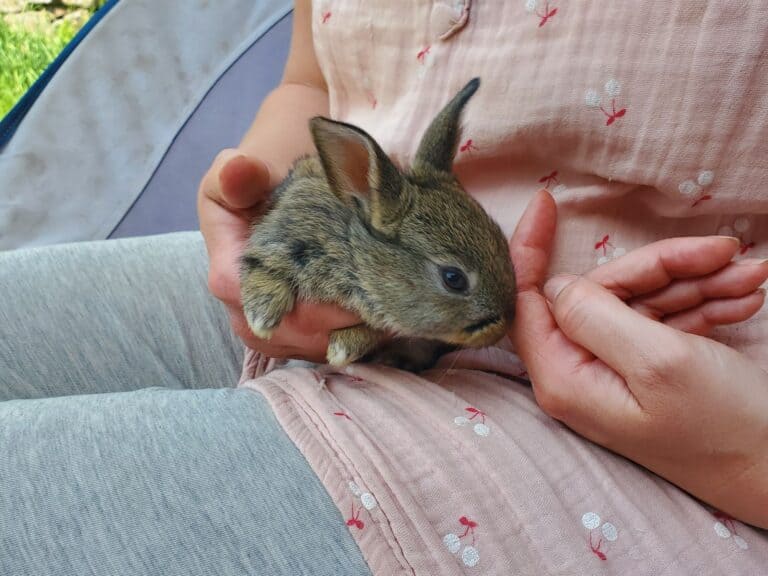
Complete Guide to How to Feed Baby Rabbits Without a Mother
What to Feed Baby Rabbits Without a Mother
Finding a tiny baby bunny alone can stir up immediate concern. Your first instinct is help right away: bring the rabbit inside, offer food, and try to care for it like any other newborn animals. But rabbits are a little different. In many cases, a seemingly abandoned bunny actually still has a mother caring for it.
Understanding the behavior of the mother rabbit is the first and most important step. Whether you’ve discovered a nest of bunnies in your yard, found a helpless baby rabbit, or are raising an orphaned bunny from your own domestic rabbits, knowing what to feed baby rabbits without a mother can save a cute little bun on your homestead.
This guide will walk you through what to do, what not to do, and how to give baby bunnies the best chance of survival, whether they are wild baby rabbits or domestic bunny kits from your own rabbitry.
This post may contain affiliate links. See my full disclosure here.
First: Make Sure the Baby Rabbits Are Truly Orphaned
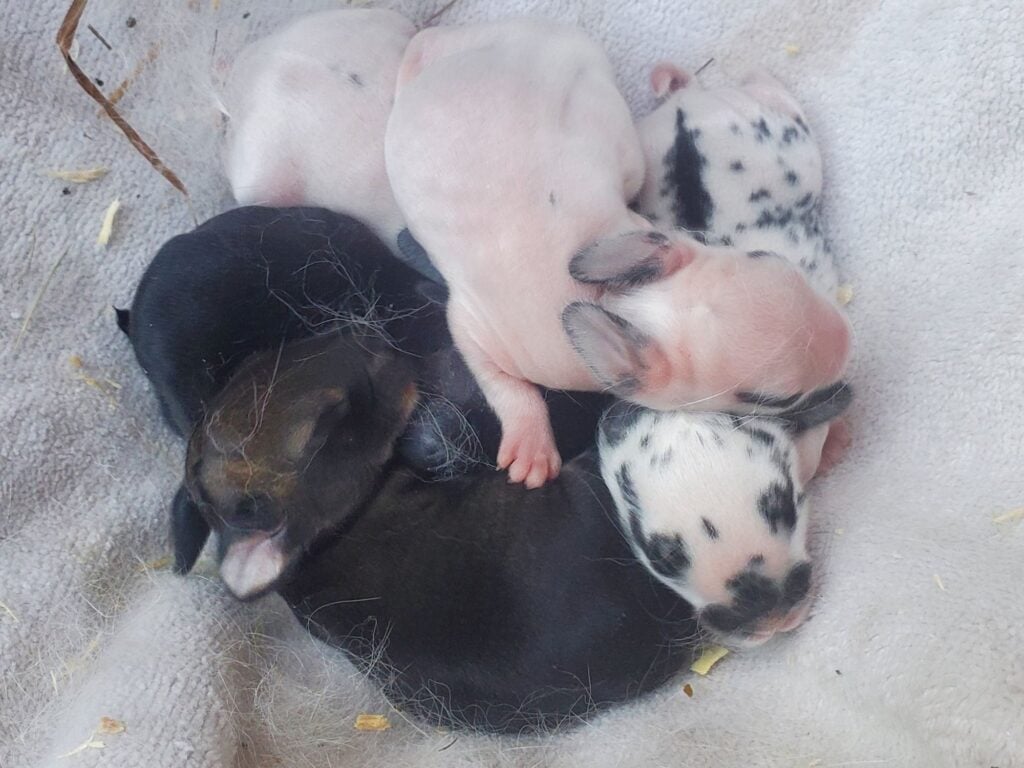
A rabbit’s parenting style is very different from many other animals. Rabbits are prey animals, and the doe, or mother only visits the rabbit’s nest about once or twice per day — often in the middle of the night — to feed their babies. Yes, even right after giving birth (called kindling), she is rarely in the nest box.
This surprises many people. If you check on a nest of bunnies, or more properly, kits, during the day, you will almost never see the doe nearby. The babies may appear alone for most of the day, which leads people to assume the babies are orphaned.
Since the mother’s milk is extremely rich, and a quick feeding time once or twice daily is all healthy kits need.
Signs the Mother Is Still Caring for the Nest
Before assuming you have an orphaned rabbit, look for these signs:
- The babies are warm and quiet
- Their bellies appear slightly rounded after feeding time
- The soft nest area is covered with fur and grass
- The babies are snuggled together in the middle of the nest
For domestic rabbits:
Be sure your doe has ample space to access her nest box without crushing the kits. An awkward shape of nest box or the lip being too high can cause problems. We love stainless steel nesting boxes.
For Wild Buns:
A simple trick wildlife rehabilitators sometimes recommend is placing small sticks or a tic-tac-toe pattern of yarn over the rabbit’s nest. Check it again the next morning. If the pattern has been disturbed, the wild bunny’s mom has likely returned to feed them.
When Baby Rabbits Truly Need Help
Sometimes babies do become wild orphans. A nest may be destroyed by lawn equipment, predators, or weather. A mother rabbit may be ill or killed, or domestic rabbits may reject a litter.
You may have a true orphaned bunny if:
- The babies are cold or scattered outside the nest
- The nest of bunnies has been dug up
- The babies appear dehydrated or wrinkled
- The mother rabbit is confirmed dead
When that happens, careful human care becomes necessary.
The Best Thing: Try to Find a Foster Doe
For domestic rabbits, the best thing you can do for an orphaned bunny is to find another lactating doe to adopt the babies. If you don’t have a doe on your homestead, you can also put out a local shout out to other rabbitries and see if anyone else has a doe that could foster the kit or kits.
Rabbit mothers usually do not recognize their babies by scent. This means another doe can often successfully nurse a litter that is not her own.
How to Foster Baby Rabbits
If you have multiple rabbit mothers in your rabbitry, try this method:
- Wait until the foster doe leaves her nest box.
- Gently place the orphaned bunny into the nest of her existing litter.
- Rub a little nesting fur over the new baby.
- Return the nest box exactly as it was.
Because rabbit mothers feed so quickly, they rarely notice an extra baby. This natural feeding of true orphans dramatically improves the chances of survival compared to bottle feeding.
For homesteaders raising domestic bunny litters, fostering is almost always the safest solution.
Domestic Rabbits vs Wild Baby Rabbits
The type of rabbit matters greatly when deciding what to feed.
Domestic Rabbits
Domestic rabbits raised for homesteading or kept as good pets rely heavily on human care when orphaned. If their mother’s milk is unavailable, they will need a milk replacement.
Wild Baby Rabbits
Wild baby rabbits have extremely delicate immune systems and a specialized wild baby rabbit diet. Their intestinal tract depends on specific normal bacteria that are difficult to replicate in captivity.
Because of this, the leading cause of death for wild babies raised by humans is digestive failure.
Whenever possible, contact a licensed wildlife rehabilitator for wild bunny care. They have access to the correct formulas, feeding techniques, and housing conditions needed to mimic a natural environment.
The Best Formula Substitute for Baby Rabbits
When mother’s milk is unavailable, you must provide a suitable replacement. This article shows the nutrient breakdown of a doe’s milk.
Baby rabbit formula recipe
- 1/2 cup fresh, whole goat milk
- 1/2 cup KMR (Kitten Milk Replacer)
- 1 Tbsp. freeze dried colostrum from a health food store
- 1/2 tsp heavy creamMix ingredients together in a lidded container, and shake very well until colostrum is dissolved. It’s best to mix this a few hours in advance so that the colostrum has time to soften and suspend easily.
Gently warm the formula to about 105o F before feeding.
If you cannot access the ingredients for the formula, use either Kitten milk replacer or goat milk. Kitten milk replacer is the most commonly recommended because it is easy to find in pet stores and closely resembles rabbit milk.
Never feed cow’s milk. Cow milk has the wrong fat and protein levels and can quickly cause fatal intestinal disease in baby rabbits.
Supplies You Will Need
If you must bottle feed an orphaned bunny, gather these supplies:
- Kitten milk replacer or goat milk
- A small ml syringe or eyedropper
- instant read thermometer
- Clean towels
- A heating pad on low setting
- A small box to create a soft nest area
Maintaining warmth is critical. Baby rabbits cannot regulate their body temperature well during their first weeks of age.
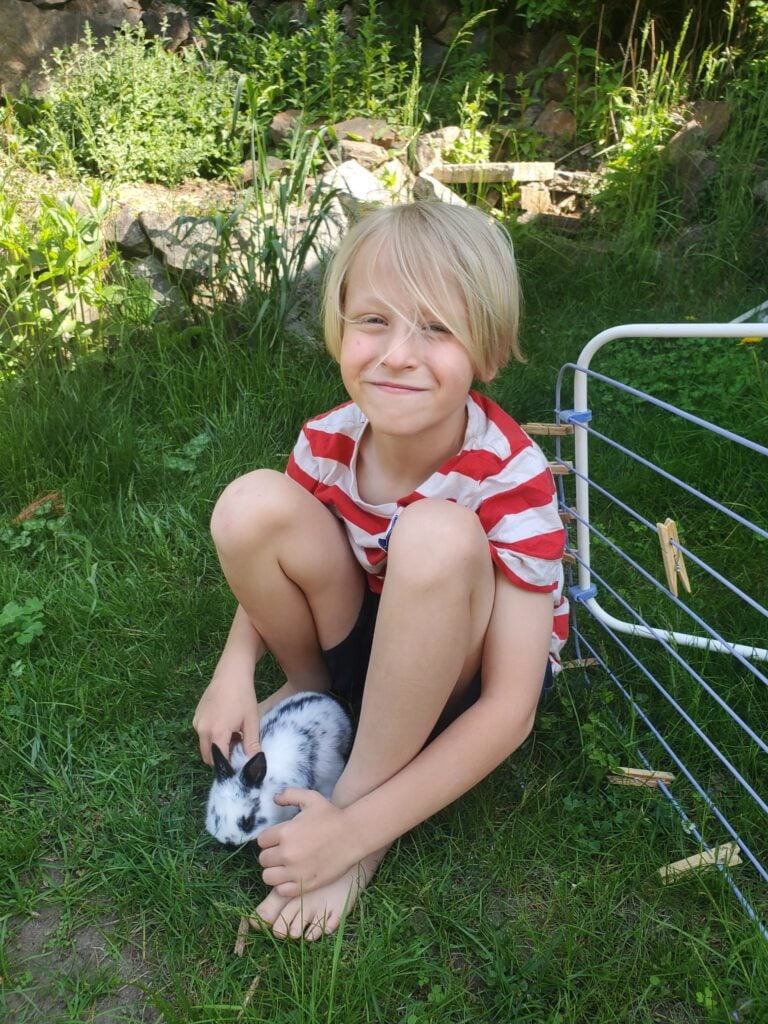
Keeping Baby Rabbits Warm
Before offering the first feeding, ensure the baby rabbits are warm.
Cold babies cannot digest food properly, and feeding a chilled rabbit can cause severe intestinal tract problems.
Place the babies in a small container lined with clean towels. Use a heating pad on low setting under half of the nest so the babies can move to a cooler area if they become too warm.
Avoid excessive heat. The goal is gentle warmth, similar to what they would experience in a rabbit’s nest.
Room temperature environments are usually fine once the babies are active and several weeks of age.
How to Bottle Feed an Orphaned Bunny
Be patient and gentle!
Proper Feeding Position
Always hold the baby bunny in an upright position or slightly forward.
This mimics the natural nursing posture under the mother rabbit.
Allow the bunny to suckle slowly from the ml syringe. Never force much formula into the mouth, as too much formula too quickly is one of the biggest risks in hand feeding.
Bunny Probiotics
If you have a healthy adult rabbit at home, you can also help support the baby bunny’s intestinal tract by introducing beneficial gut bacteria. One way to do this is by using cecotropes — the soft, nutrient-rich droppings that rabbits normally consume directly to maintain healthy digestion.
If you’re able to collect a fresh cecotrope from a healthy adult rabbit, it can be mixed into the homemade bunny formula during feeding. This helps introduce normal bacteria into the baby bunny’s digestive system, which is especially important for very young rabbits. Only one cecotrope per day for about four to five days is usually enough, and this step is particularly helpful for babies under one week of age.
Another option is to add a small sprinkle of acidophilus powder from a human probiotic capsule into the milk at feeding time. This can also help support healthy gut flora while the baby rabbit’s digestive system is still developing.
Feeding Schedule by Age
Young rabbits require small amounts at specific intervals.
Newborn to 1 week of age
- Feed twice daily, a very small daily amount, and watch carefully for bloating
- about 2 mL per feed
1–2 weeks of age
- Continue twice daily feeding
- Gradually increase the amount of formula
- 5-10% of its body weight of formula a day, divided by the two feedings, or about 10-15 mL total in a day
2–3 weeks of age
- Introduce small amounts of solid foods
- up to 30 mL formula
Continue to offer milk up to 8 weeks.
Always watch the baby’s body length and belly shape. A healthy feeding leaves the stomach slightly rounded but not tight.
Stimulating the Bathroom
Another critical part of caring for a helpless baby rabbit involves helping them eliminate waste. Remember how we talked about their super sensitive tummies? You can’t skip this step!
Mother rabbits stimulate the urinary system and bowels by licking the babies.
When raising an orphaned bunny, you must replicate this step.
After feeding:
- Wet a cotton ball or a q-tip with warm water.
- Gently rub the anal area.
- Continue for about 20 seconds until the baby urinates or produces stool.
Don’t skip this! If the rabbit doesn’t pee or poop after the feed, try again before the next feed, and don’t feed them until it happens.
Introducing Solid Foods
At around 10-15 days old, baby bunnies begin exploring solid foods.
This is an exciting milestone in their development, however just like in human babies, where they say “food before one is just for fun,” kits ages 2 weeks up to 8 weeks still require milk. Ideally, kits would not be separated from the doe until 8 weeks of age, so as we hand0feed the kits we must also continue to give milk for 8 weeks for their ongoing gut health and flourishing.
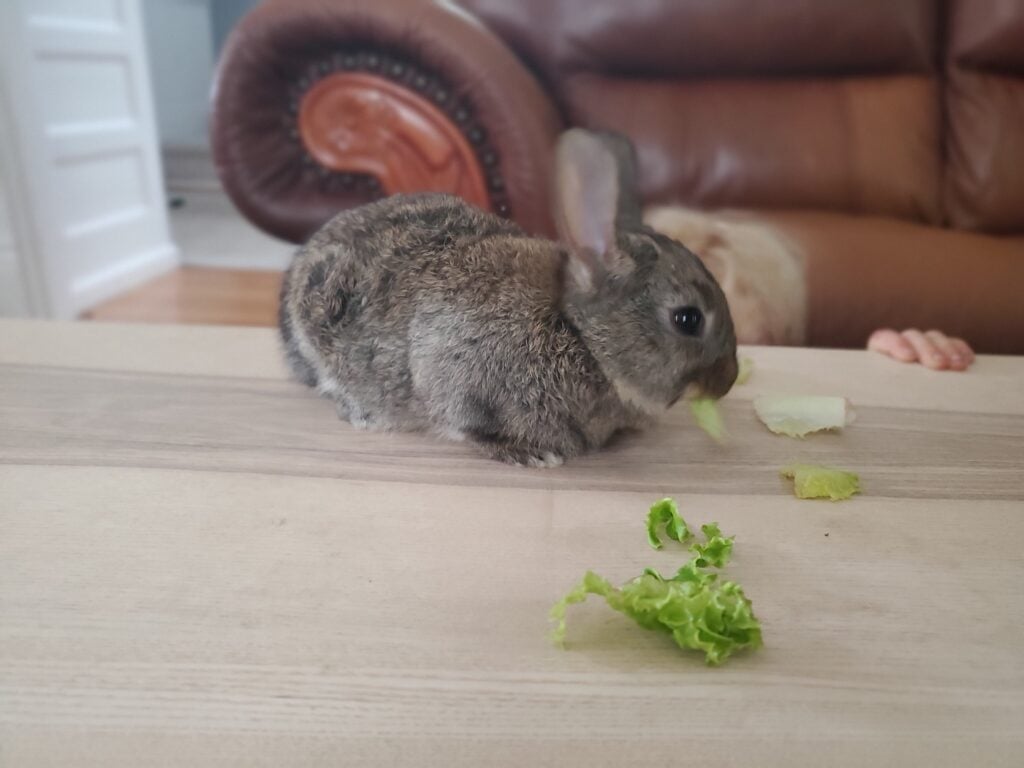
Safe First Foods
Offer small amounts of:
- High quality rabbit pellet
- Timothy hay
- Dandelion greens
- Small fresh greens
Hay is the most important early food because it supports healthy gut flora and proper digestive development.
It is a good idea to introduce fresh fruits and vegetables very slowly since rabbits have such sensitive digestive tracts, and cannot throw up.
Foods to Avoid
Some foods can cause severe digestive problems in young rabbits.
Avoid:
- Dairy products
- Sugary fruit
- Processed foods
- Large amounts of vegetables
Unfortunately, the wrong food at a young age can quickly trigger fatal intestinal disease, so keep this kind of thing on lockdown!
Handling Baby Rabbits Gently
Baby rabbits are fragile, and excessive handling can cause stress that weakens their immune systems.
Keep them in a quiet place away from pets and loud activity. Limit handling to feeding time and necessary care.
Wild babies especially are easily stressed by human contact, and their chances of survival decrease significantly with excessive handling.
When to Contact a Wildlife Rehabilitator
If you find wild baby rabbits, the best course of action is usually to leave them alone or contact a licensed wildlife rehabilitator.
Wildlife professionals understand the special care involved in raising young wild rabbits, such as:
- The diet of wild baby rabbits
- Safe feeding of true orphans
- How to replicate a natural environment
- The correct formula and feeding schedules
Wild animals raised improperly often cannot survive once released.
In many regions, it is also illegal to raise wild rabbits without proper permits because they are considered a natural resource.
Signs Your Baby Rabbit Is Healthy
Whether raising domestic rabbits or temporarily caring for wild orphans, watch for these signs of healthy babies:
- Round bellies after feeding
- Warm body temperature
- Quiet resting behavior
- Gradual weight gain
- Clean scent glands and skin
A healthy adult rabbit begins life as a stable, well-fed baby with a properly functioning digestive system.
The Rare Situation of Raising Baby Rabbits Yourself
Hand raising rabbits should always be considered a rare situation.
Even experienced breeders prefer letting rabbit mothers raise their own litters whenever possible. Mother’s milk provides antibodies and nutrients that no formula can fully replace.
When the feeding of true orphans becomes necessary, patience and careful attention to detail are critical.
Providing proper warmth, correct feeding amounts, and appropriate solid foods gives these fragile animals their best chance.
Final Thoughts on Feeding Baby Rabbits Without a Mother
Caring for baby bunnies is both rewarding and challenging. Their small size and delicate digestive systems make them vulnerable during their earliest weeks of life.
Whenever possible:
- Leave wild baby rabbits in their rabbit’s nest
- Allow rabbit mothers to raise their babies
- Foster orphaned kits to another doe
Only step in with human care when absolutely necessary.
If you do find yourself responsible for an orphaned rabbit, remember that warmth, gentle feeding, and the correct formula substitute are the foundation of survival.
With patience and careful care, many baby bunnies can grow into healthy adult rabbits — whether they become productive homestead animals or beloved good pets.
And if you’re raising domestic rabbits on a homestead, learning these skills ensures you’re prepared for the unexpected moments that come with working alongside animals and nature. Hopefully, you won’t need to! But it is better to have some info an resources for just in case you do.
Pin this post for later!
If you liked this post, please consider sharing it with a friend or pinning to Pinterest so others can find it and enjoy it!
Check out some of my recent posts: